

Introduction
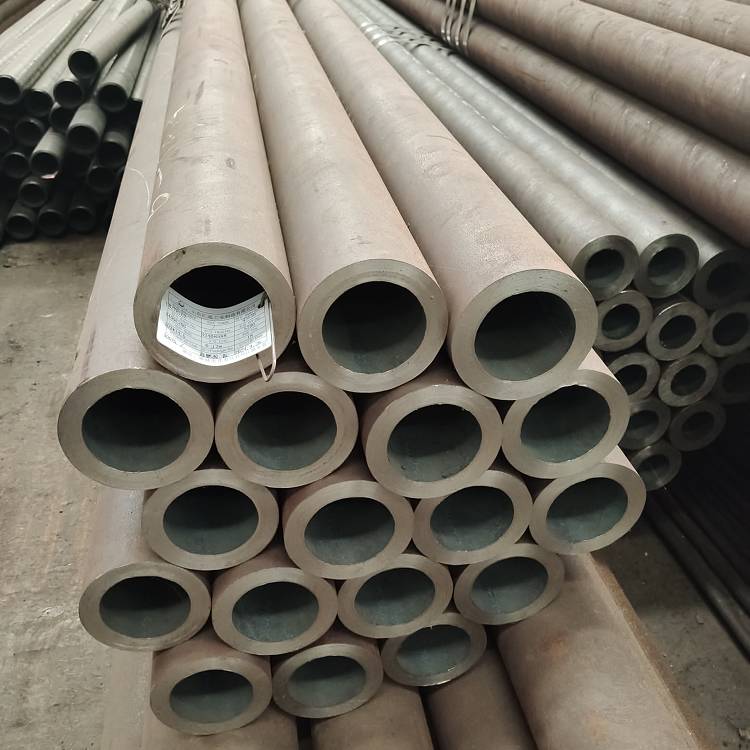
Seamless steel pipes are widely used in industries such as oil & gas, automotive, construction, and power plants due to their high strength, leak-proof performance, and precise dimensions. Maintaining tight dimensional accuracy is crucial for ensuring proper fit, structural integrity, and long-term reliability.
This guide covers performance characteristics, installation conditions, usage best practices, and operational procedures for seamless pipes, aligned with ISO, ASTM, and EN standards.
1. Performance Characteristics of High-Precision Seamless Pipes
Seamless pipes with controlled dimensional accuracy offer superior performance in demanding applications.
1.1 Key Advantages
✔ Tighter tolerances (OD, ID, wall thickness) for precise fittings. ✔ Higher pressure resistance due to uniform wall thickness. ✔ Smooth internal surface reduces friction and improves flow efficiency. ✔ Better weldability with consistent dimensions.
1.2 Comparison of Dimensional Standards
| Standard | Outer Diameter Tolerance | Wall Thickness Tolerance | Common Grades |
|---|---|---|---|
| ASTM A106 | ±0.79 mm | +12.5% / -10% | A, B, C |
| ASTM A312 | ±1% of OD | ±10% | TP304, TP316 |
| EN 10216 | ±0.75 mm | ±10% | P195, P265 |
| ISO 9303 | ±0.5 mm | ±7.5% | – |
2. Installation Conditions for Seamless Pipes
Proper installation ensures longevity and prevents failures.
2.1 Pre-Installation Checks
- Inspect pipes for dimensional conformity (OD, ID, roundness).
- Verify material certification (mill test reports).
- Check for surface defects (cracks, scratches, corrosion).
2.2 Environmental & Handling Requirements
✔ Storage: Keep pipes off the ground on wooden supports to prevent deformation. ✔ Temperature: Avoid extreme thermal variations before installation. ✔ Handling: Use nylon slings instead of steel hooks to prevent surface damage.
3. Usage & Operational Best Practices
Follow these guidelines to maximize pipe performance.
3.1 Cutting & Machining
- Use cold-cutting methods (sawing, abrasive cutting) to avoid heat distortion.
- Deburr edges to prevent flow restrictions.
4. Step-by-Step Dimensional Control Process
Manufacturers follow strict procedures to ensure precision.
4.1 Manufacturing Process Control
- Billet Heating – Uniform temperature for consistent extrusion.
- Piercing & Rolling – Maintains roundness and wall thickness.
- Sizing & Straightening – Ensures final dimensional accuracy.
5. Common Defects & Troubleshooting
5.1 Dimensional Issues & Solutions
| Defect | Cause | Solution |
|---|---|---|
| Ovality | Improper rolling | Re-calibrate sizing mill |
| Wall Thickness Variation | Uneven piercing | Adjust mandrel position |
| Bent Pipes | Cooling stress | Re-straighten or reject |
6. Industry Applications of Precision Seamless Pipes
| Industry | Application | Required Tolerance |
|---|---|---|
| Oil & Gas | Drill pipes, pipelines | ±0.5 mm OD |
| Automotive | Fuel injection systems | ±0.1 mm ID |
| Power Plants | Boiler tubes | ±7.5% wall thickness |
| Hydraulic Systems | Cylinder tubes | ±0.05 mm roundness |
