

Introduction to Hot-Rolled Seamless Steel Pipes
Hot-rolled seamless steel pipes are widely used in industries such as oil & gas, construction, automotive, and machinery due to their high strength, durability, and resistance to pressure. Unlike welded pipes, seamless pipes are manufactured without any joints, making them ideal for high-pressure applications.
This guide provides a detailed breakdown of the production process, key components, energy efficiency considerations, maintenance best practices, and usage precautions to ensure optimal performance.
Production Process of Hot-Rolled SeProduction Process of Hot-Rolled Seamless Steel Pipes
The manufacturing of hot-rolled seamless steel pipes involves multiple stages to ensure structural integrity and dimensional accuracy.
1. Raw Material Selection
- Primary Material: High-quality carbon steel or alloy steel billets.
- Key Properties: Low impurities, uniform chemical composition, and proper metallurgical structure.
2. Heating the Billet
- The steel billet is heated in a rotary furnace or induction heater to 1,200–1,300°C to make it malleable.
- Ensures uniform temperature distribution for consistent rolling.
3. Piercing (Rotary Piercing Mill)
- A piercing mandrel creates a hollow shell by forcing the billet through rollers.
- The Mannesmann process is commonly used for seamless pipe production.
4. Elongation (Mandrel Mill or Plug Mill)
- The hollow shell is stretched and thinned using a mandrel rod inside a rolling mill.
- Ensures uniform wall thickness and smooth internal surface.
5. Sizing and Reducing
- The pipe passes through sizing rollers to achieve the final diameter.
- Stretch-reducing mills (SRM) may be used for further diameter adjustments.
- Pipes are cut to required lengths.
- Non-destructive testing (NDT) methods (ultrasonic, hydrostatic, eddy current) verify quality.
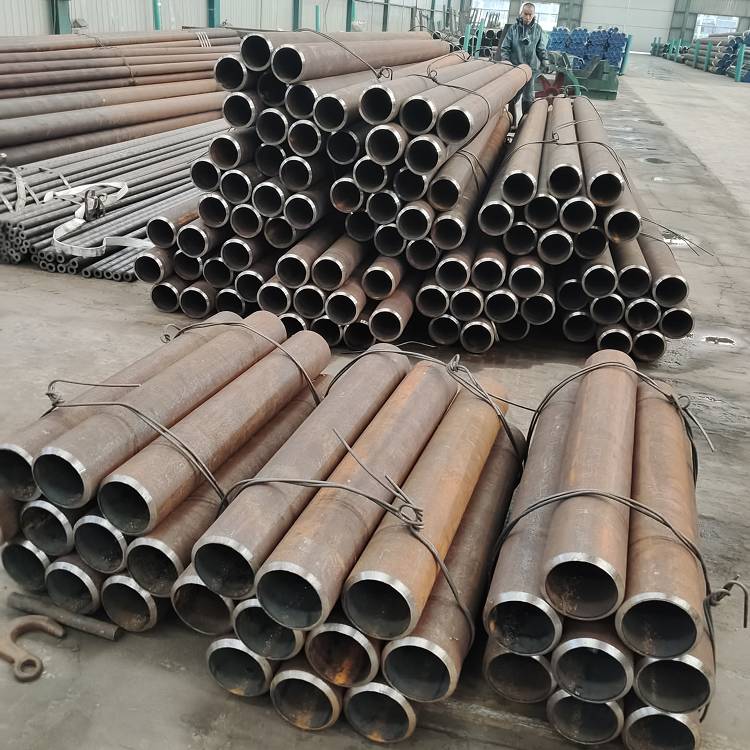
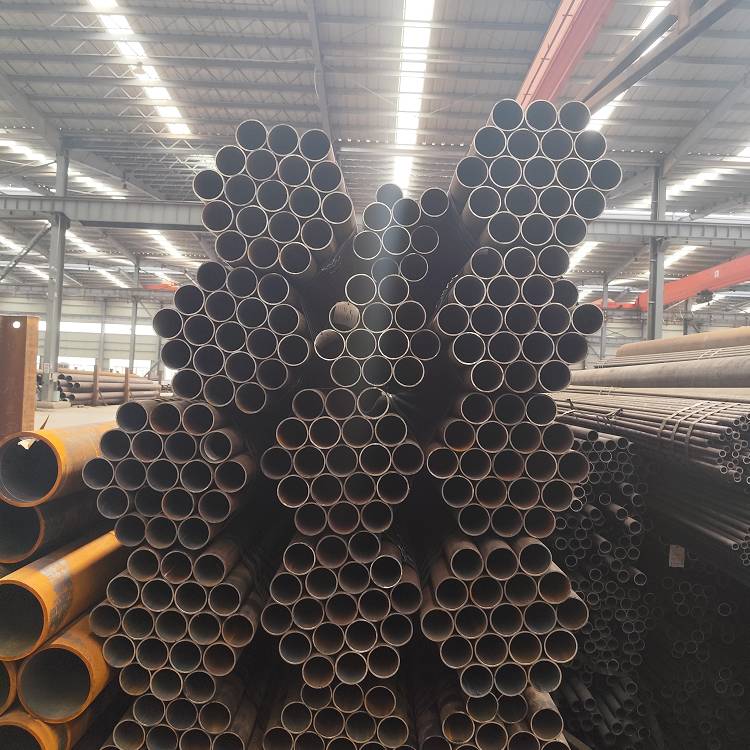
Production Process Flowchart
| Step | Process | Key Equipment | Temperature Range | |------|---------|-------------- | |------|---------|--------------|------------------| | 1 | Billet Heating | Rotary Furnace | 1,200–1,300°C | | 2 | Piercing | Rotary Piercing Mill | 1,100–1,250°C | | 3 | Elongation | Mandrel Mill | 950–1,100°C | | 4 | Sizing | Stretch-Reducing Mill | 800–950°C | | 5 | Cooling | Cooling Bed | Ambient | | 6 | Inspection | NDT Machines | - |
Key Components & Spare Parts in Seamless Pipe Production
For maintenance and operational efficiency, manufacturers should keep essential spare parts in stock:
Critical Components List
| Component | Function | Replacement Frequency |
|---|---|---|
| Piercing Mandrel | Forms the hollow shell | Every 500–1,000 cycles |
| Rolling Mill Rolls | Shapes the pipe | 6–12 months |
| Induction Heater Coils | Heats billets | 2–5 years |
| Cooling Bed Rollers | Transports & cools pipes | 1–3 years |
| Straightening Dies | Ensures straightness | 1–2 years |
Energy Efficiency & Sustainable Production
Hot-rolling is energy-intensive, but modern techniques improve efficiency:
1. Waste Heat Recovery
- Captures excess heat from furnaces to preheat incoming billets (saves 15–20% energy).
2. High-Efficiency Induction Heating
- Reduces energy loss compared to traditional gas furnaces.
Energy Consumption Comparison
| Process | Traditional Method (kWh/ton) | Optimized Method (kWh/ton) | Savings |
|---|---|---|---|
| Billet Heating | 450 | 380 | 15% |
| Rolling | 300 | 250 | 17% |
| Cooling | 100 | 80 | 20% |
Maintenance & Upgrade Plan for Seamless Pipe Mills
To ensure long-term efficiency, follow a structured maintenance schedule:
1. Preventive Maintenance Checklist
- Daily: Lubricate rollers, check alignment.
- Weekly: Inspect furnace linings, test hydraulic systems.
- Monthly: Calibration of NDT equipment, replace worn mandrels.
2. Predictive Maintenance (AI & IoT Sensors)
- Vibration sensors detect early wear in rolling mills.
- Thermal cameras monitor furnace efficiency.
