

ASTM A106 steel pipe is an American standard seamless carbon steel pipe widely used in high temperature and high pressure environments.
1、 Core characteristics of A106 steel pipe
Material and grade characteristics
ASTM A106 is divided into three grades: A, B, and C, with chemical composition and mechanical properties gradually increasing. For example, Class B (most commonly used): carbon content ≤ 0.30%, yield strength ≥ 240 MPa, and maximum operating temperature up to 425 ° C~650 ° C
Grade C: Carbon content ≤ 0.35%, yield strength ≥ 275 MPa, suitable for higher temperatures and large-diameter boilers.
By adjusting the carbon and manganese content to improve performance, for example, for every 0.01% decrease in carbon content, the manganese content is allowed to increase by 0.06% to enhance toughness.
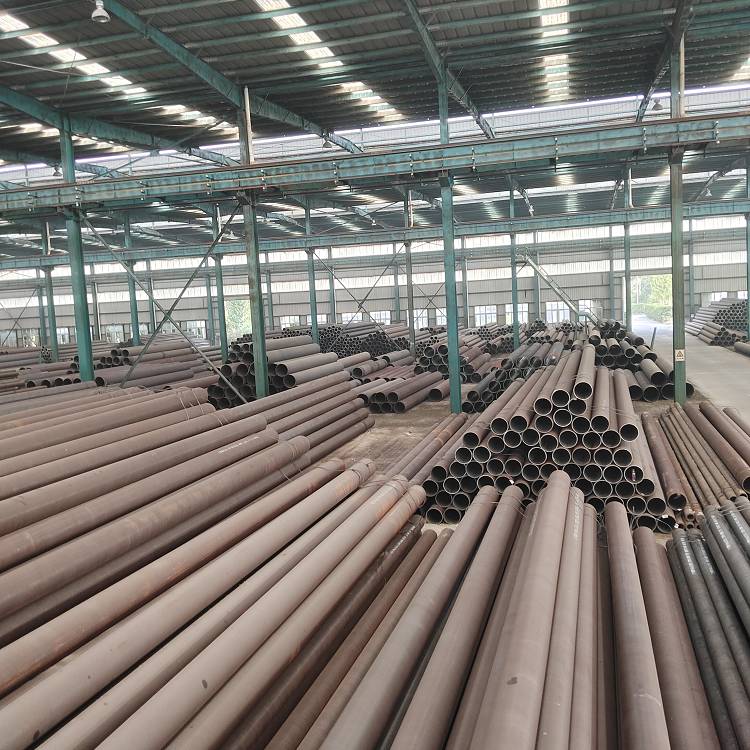
High temperature and high pressure resistance performance
It can work stably in environments up to 600 ° C (short-term), and B-class steel pipes are commonly used in high-pressure boilers and petrochemical pipelines ranging from 450 ° C to 650 ° C
The seamless structure makes its compressive strength significantly higher than that of welded pipes, such as B-grade tensile strength ≥ 415 MPa.
Corrosion resistance and processing technology
Ordinary A106 steel pipes have certain corrosion resistance to acid, alkali and salt media, but in extreme environments, they need to be galvanized (such as galvanized pipes) or acid resistant treated (such as NACE versions)
Galvanizing process enhances rust prevention ability by isolating medium contact, suitable for transporting humid or corrosive fluids
The NACE version adapts to acidic environments containing hydrogen sulfide by optimizing its composition (limiting sulfur and phosphorus) and passing HIC/SSC testing.
Processing and technological advantages
Seamless structures can be produced through hot rolling, cold drawing, or extrusion processes, with high dimensional accuracy (outer diameter ± 1% deviation) and smooth surfaces
Support secondary processing such as welding and bending to meet complex engineering requirements.
2、 Main application areas
Oil and gas industry
Transporting media such as crude oil and natural gas, with high pressure resistance to ensure pipeline safety (such as API5L A106 fixed length pipeline).
The acid resistant version (A106 Gr. B NACE) is used in oil and gas fields containing hydrogen sulfide.
Chemical and petrochemical industry
Galvanized pipes are used for reactors, storage tanks, and corrosive fluid pipelines to reduce the risk of corrosion.
Power and boiler system
The superheaters, reheaters, steam pipelines, etc. of high-pressure boilers are made of B-grade steel pipes that meet the working conditions of 450 ° C~650 ° C.
Power plant cooling water pipeline and steam delivery system
Mechanical Manufacturing and Construction
As a structural component or fluid pipeline of compressors, pump valves
Use fixed length pipes (such as 6-meter and 12 meter specifications) in building plumbing and heating systems to reduce construction losses
Other special fields
Nuclear industry (nuclear reactor pressure vessels), aerospace (engine pipelines), and shipbuilding (heat exchangers), etc.
3、 Association and differences with other standards
Compatibility with API 5L: A106 Grade B has a similar chemical composition to API 5L GR. B and can be used interchangeably for oil and gas transportation.
SA106 and ASTM A106: ASME SA106 is consistent with ASTM A106 standards, with only differences in metric and imperial markings.
summarize
ASTM A106 steel pipe has become the preferred material for industries such as petroleum, chemical, and power due to its seamless structure, high temperature and high pressure resistance, and diverse grade selection. Users need to choose the grade and treatment process according to specific working conditions (such as temperature and corrosiveness), for example, ordinary grade B is used for conventional high temperature environments, galvanized version enhances rust prevention, and NACE version is suitable for acidic media.
