

The core of damage prevention in the logistics and transportation of seamless steel pipes lies in "reasonable packaging + standardized loading + full-process protection + compliant securing". Targeted control measures are required based on the pipes’ characteristics (long length, heavy weight, and susceptibility to scratches/collisions).
1. Packaging Protection Before Transportation
Install plastic or steel end caps on both ends of the pipes to prevent end collisions and foreign objects from entering the pipes, which could cause corrosion.
For corrosion-prone surface materials (e.g., ungalvanized steel, stainless steel), wrap the pipes with waterproof film + moisture-proof paper, and cover the outer layer with woven cloth to avoid rust caused by rain or moisture during transportation.
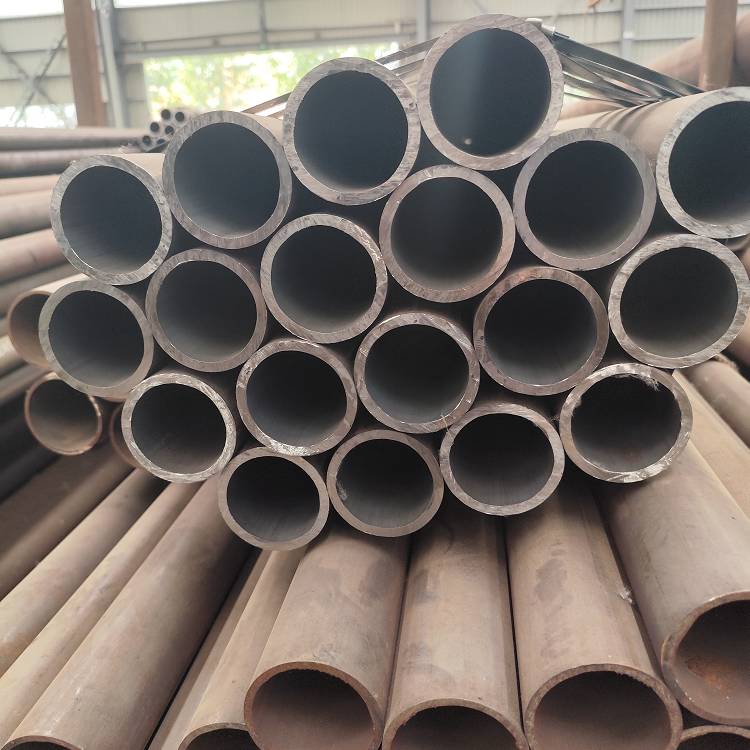
Bundle pipes by specification: Group pipes of the same diameter and length into bundles, and fasten each bundle with steel straps or high-strength iron wire. The spacing between binding points shall not exceed 1.5 meters to prevent bundle loosening during transportation.
2. Standardized Loading Operations
The carriage of transport vehicles (flatbed trucks, trailers) must be flat. Lay rubber mats, wooden planks, or straw mats to avoid direct contact between the pipes and the carriage, which could cause friction and scratches.
Arrange the pipes neatly horizontally or vertically; avoid tilting or excessive overhang (overhang length shall not exceed 10% of the total pipe length) to prevent shaking and collision during driving.
Load pipes of different specifications separately to avoid large-diameter pipes crushing small-diameter ones. The loading height shall not exceed the vehicle’s height limit, and a protective space shall be reserved—no overwidth or overloading is allowed.
3. Securing and Reinforcement Measures
Use steel wire ropes, tighteners, or special clamps for securing. Add rubber mats at the securing points for buffering to prevent the steel wire ropes from directly contacting the pipe surface, which could cause indentations or scratches.
For long pipes (length > 6 meters), set multiple securing points at both ends and the middle—reinforce every 3-4 meters to ensure no loose space in both longitudinal and transverse directions.
If transporting other goods together with the pipes, isolate the pipes from sharp or heavy goods using partitions or protective cloth to prevent goods displacement and impact on the pipes.
4. Transportation Process Control
Choose flat routes for driving; avoid sudden acceleration, sudden braking, and sharp turns to reduce inertial shaking and collision of the pipes.
When transporting in rainy or snowy weather, cover the pipes with waterproof cloth to ensure the packaging is intact and waterproof, preventing rainwater penetration and corrosion.
For long-distance transportation, regularly inspect the securing status. When stopping midway, check if the pipes are loose or the packaging is damaged, and promptly reinforce or repair the packaging as needed.
5. Unloading and Handover Notes
When unloading with cranes or forklifts, use special lifting tools (sling belts, soft cables); do not directly lift the pipe ends with steel wire ropes to avoid damaging the pipe mouths.
When operating forklifts, cover the fork tines with rubber sleeves, lift and place gently to avoid impacting the pipe sides or ends—single-fork loading is prohibited.
During handover, on-site inspect the pipe appearance and packaging for integrity. Sign for acceptance only after confirming no scratches, deformation, or corrosion. If damage is found, take photos for documentation and communicate with relevant parties for liability investigation.
