

Hot-rolled and cold-rolled square tubes differ significantly in manufacturing processes, performance characteristics, and applications. The key distinctions are as follows:
1. Manufacturing Process
-
Hot-Rolled Square Tubes
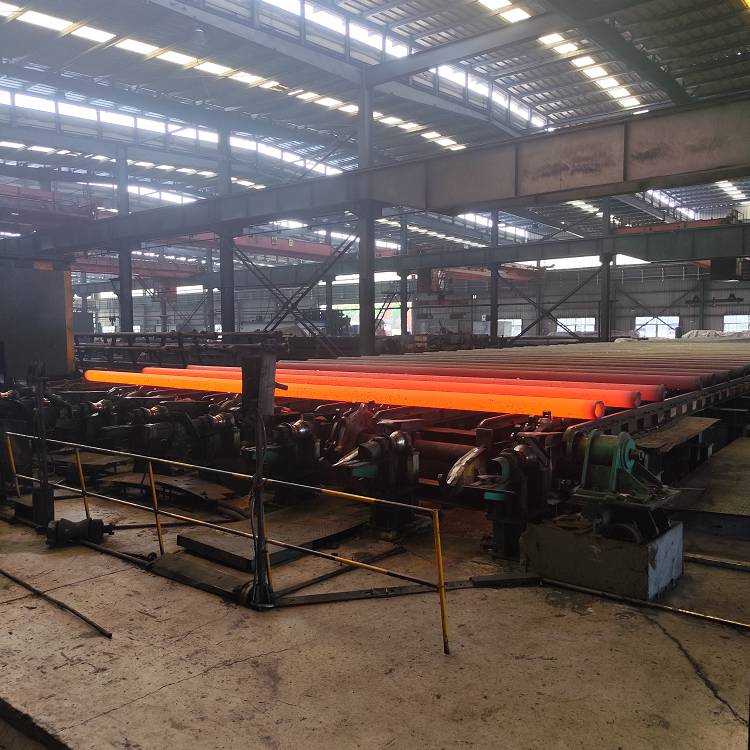
- Temperature: Rolled at high temperatures (typically above 1000°C), where the material remains above its recrystallization point.
- Process: Steel billets are heated and directly rolled into shape, often resulting in a rough surface with natural oxide scale.
- Dimensional Tolerance: Relatively loose, with lower precision in wall thickness and side length.
-
Cold-Rolled Square Tubes
- Temperature: Processed at room temperature using pre-rolled hot-rolled billets (via cold drawing or cold rolling).
- Process: Involves cold deformation, requiring additional treatments like pickling and annealing to improve plasticity.
- Dimensional Tolerance: High precision, smooth surface, and uniform wall thickness.
2. Performance Characteristics
-
Hot-Rolled Square Tubes
- Strength: Lower (due to a more porous internal structure after high-temperature processing).
- Ductility: Better, suitable for dynamic load-bearing applications.
- Surface Quality: Rough, may have oxide scale or minor cracks.
-
Cold-Rolled Square Tubes
- Strength: Higher (due to work hardening from cold processing).
- Ductility: Slightly reduced, with increased brittleness.
- Surface Quality: Smooth and refined, free from oxide scale, offering better aesthetics.
3. Applications
-
Hot-Rolled Square Tubes
- Used in structural components where precision and appearance are less critical, such as building frames, machinery bases, and bridge supports.
- Ideal for large or thick-walled tubes.
-
Cold-Rolled Square Tubes
- Used in precision instruments, automotive parts, furniture, and decorative engineering where high dimensional accuracy and surface finish are required.
- Suitable for thin-walled or small-diameter tubes.
4. Cost & Efficiency
- Hot-Rolling: Lower production cost, suitable for mass production, but energy-intensive.
- Cold-Rolling: More complex (multi-stage processing), higher cost, but better material utilization.
5. Additional Differences
- Residual Stress: Hot-rolled tubes have minimal residual stress, while cold-rolled tubes require annealing to relieve work-hardening stress.
- Formability: Cold-rolled tubes offer better shaping capability, making them suitable for complex cross-sections.
Conclusion
The choice between hot-rolled and cold-rolled square tubes depends on requirements:
- For high strength, precision, and aesthetics → Cold-rolled tubes.
- For cost efficiency, toughness, and large-scale structures → Hot-rolled tubes.
